



What this page covers
- Facts checked
- Sources
- 31 listed, with access dates
- Screenshots
- 4 dated public-page captures
- Score
- No numeric score on this page
Official docs, pricing pages, GitHub READMEs and company announcements read on 7 Nov 2026 in an AI-assisted research browser; public pages captured logged out from Pakistan at 1440x900; one official demo per tool sampled at stated timestamps.
What I checked
- Reviewed in public docs only, not tested: plan tables, usage-limit wording and FAQs for both
- Reviewed in public docs only, not tested: install, license, CI, cloud and scheduling docs for both
Not covered
- No account testing was performed for this review
- No comparative coding benchmarks or product-account tests were performed.
- Demos not watched in full
How to decide in two questions
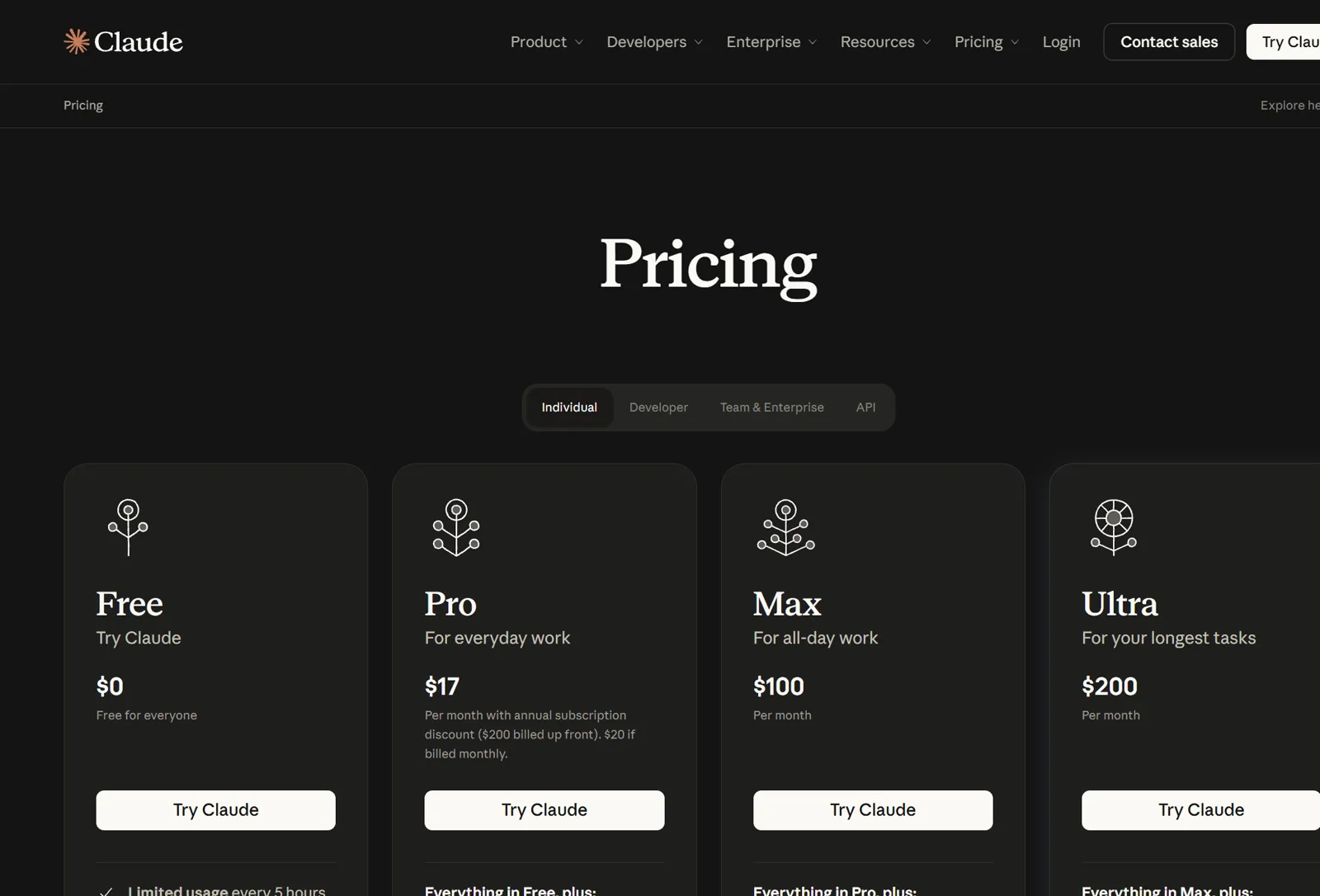
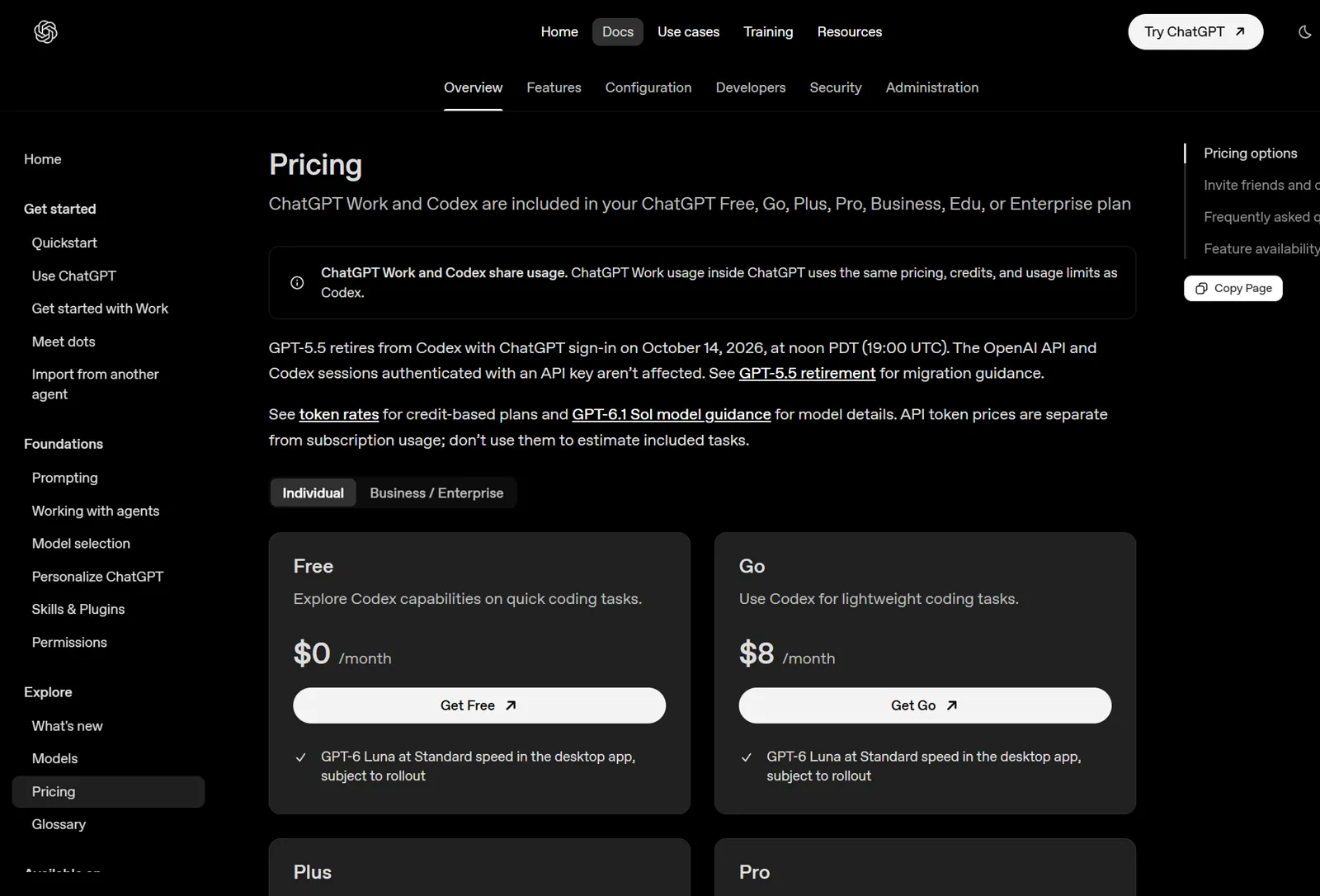
First question: which subscription do you already pay for? On a Claude subscription, Claude Code comes with Pro and higher plans, and the Free plan does not include it (Claude pricing). It also runs on a pay-as-you-go Anthropic Console account, and its terminal CLI, VS Code and JetBrains extensions support third-party model providers (Claude Code docs). Codex comes with ChatGPT plans. Plus, at $20 a month, lists Codex on the web, in the CLI, in the IDE extension and on iOS, while the Free and Go plan cards list GPT-6 Luna in the desktop app, "subject to rollout" (Codex pricing). If you already pay for one of them, start there.
Second question: where will the tool you build run, and where does your code live? Each vendor documents CI, cloud and local routes, with different sign-in and repository-host rules.
- CI with an API key. Claude Code's GitHub Action takes an Anthropic API key or a subscription OAuth token stored as a GitHub secret and can run on a cron schedule (Claude Code GitHub Actions docs). Its GitLab CI/CD integration is in beta, is "maintained by GitLab", and runs in your GitLab runners with an Anthropic API key, Amazon Bedrock or Google Cloud's Agent Platform; that page documents no subscription-token route (Claude Code GitLab CI/CD docs). OpenAI's Codex GitHub Action (openai/codex-action@v1) takes an OpenAI API key and runs codex exec (Codex GitHub Action docs), and the pricing page calls API-key use "Great for automation in shared environments like CI" (Codex pricing).
- Cloud work tied to your account. Claude Code cloud sessions run on Pro, Max, Ultra and Team, and for Enterprise users with premium or Chat + Claude Code seats; they keep running after you close your laptop and count toward your plan's usage limits. Cloning and pull requests in Anthropic-hosted sessions require GitHub; a GitLab repository can be sent as a local bundle, but the session "can't push results back to that remote" (Claude Code cloud sessions docs). On Team and Enterprise, self-hosted environments ("in public beta", "off by default") can also use another git host with an --environment dispatch (Claude Code self-hosted environments docs). Cloud scheduled tasks run as cloud sessions and belong to your claude.ai account; the CLI hides /schedule when you sign in with a Console API key, because it "requires a claude.ai subscription login" (Claude Code cloud scheduled tasks docs). Codex Cloud tasks "can keep working while your computer is asleep" with ChatGPT sign-in (Codex Cloud docs) and are not available in API-key mode (Codex pricing). Codex's GitLab support is in beta, "available on all ChatGPT plans" and "runs in Codex cloud": @codex review and automatic reviews work on merge requests; coding tasks need a project environment, "For GitLab.com, a project environment is also required to enable Codex reviews", and self-managed or Dedicated GitLab needs workspace-admin setup (Codex GitLab docs). ChatGPT Work can run tasks in Cloud "such as a scheduled website check" where the workspace offers Work Cloud (Get started with ChatGPT Work docs), and Team Tasks "run in the cloud through the team's service account" (Codex scheduled tasks docs; Team Tasks docs). This review did not check which plans or workspaces get Work Cloud.
- Local work on your machine. Claude Code's desktop scheduled tasks and /loop run on your machine (Claude Code cloud scheduled tasks docs). Codex desktop tasks on local projects need you to "Keep the computer on and the app running" (Codex scheduled tasks docs).
For GitLab, Claude documents the GitLab-maintained CI/CD beta in your runners, a bundle sent to a cloud session that cannot push back, and a Team and Enterprise self-hosted beta; Codex documents a GitLab integration that runs in Codex cloud. For a GitHub team both offer CI and cloud routes. None was tested in this review; treat this as a map of documented routes.
Scorecard at a glance
| Pillar and weight | Claude Code | Codex | Evidence held |
|---|---|---|---|
| UI and UX, 25 | n/s | n/s | Public pages; one vendor demo segment each |
| Capability for building GTM tools, 30 | n/s | n/s | Official docs and feature tables |
| Cost and pricing, 15 | n/s | n/s | Dated plan prices, no metered usage |
| Technical fit, 15 | n/s | n/s | Install docs and READMEs |
| Vendor durability, 15 | n/s | n/s | Company announcements |
That leaves 0 of 100 points scored and no overall winner. Without the same task run on both, I have no basis for a score.
What each one is
Claude Code is Anthropic's coding agent. Its docs describe it as "an AI-powered coding assistant that helps you build features, fix bugs, and automate development tasks" and list five surfaces: terminal, VS Code, JetBrains, a desktop app and the web (Claude Code docs). Anthropic says it "was made available to the general public in May 2025" (source).
Codex is OpenAI's coding agent. The Codex CLI README says it "runs locally on your computer" and points to an IDE extension, a desktop app and a cloud agent (source). OpenAI's pricing page says Codex and ChatGPT Work share usage on the same plan limits (Codex pricing).
By GTM tools I mean small codebases that call several outside APIs: a lead enrichment script, a CRM sync, a scoring service or an internal report.
How these facts were checked
On 7 November 2026 the official docs, pricing pages, both GitHub READMEs and company announcements were read in an AI-assisted research browser, which also saved page screenshots and sampled short segments of one official demo per tool. The browser ran from Pakistan at a 1440 by 900 desktop viewport, logged out. No account testing was performed for this review. No functional product tests were run with either agent, so this page cannot tell you which one writes better code or finishes faster.
What the public pages and the demos show
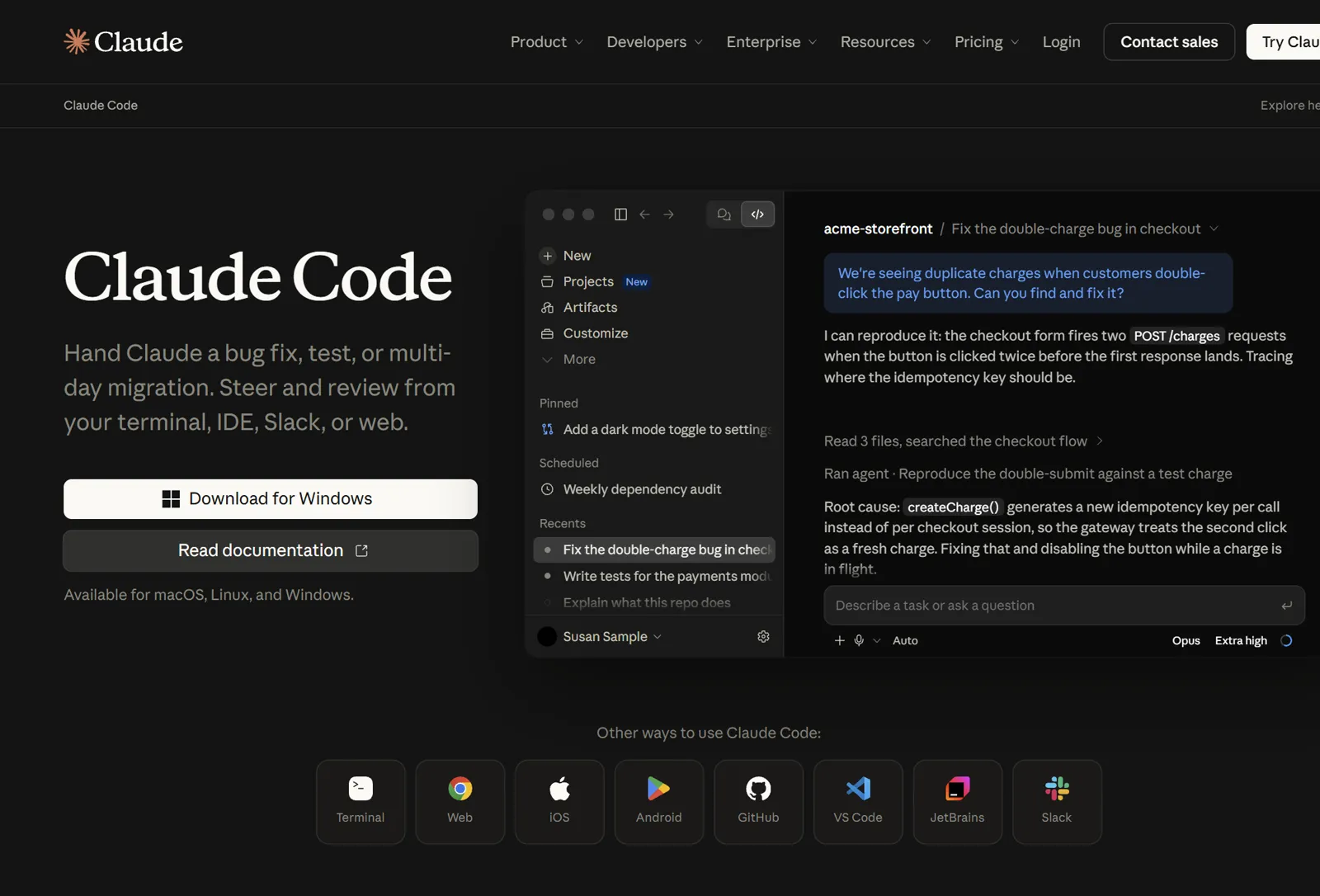
Observed in vendor demo, Claude Code: in Anthropic's "Introducing Claude Code" video (Anthropic), at about 0:54 the terminal shows "Welcome to Claude Code research preview!" with hints for bash mode and slash commands. At about 1:06 it reads package.json and explains a Next.js support-agent project. At about 1:50 it shows an inline diff, "Updated components/TopNavBar.tsx with 1 addition and 1 removal". This recording shows the research preview, which came before the May 2025 general release, so today's interface may differ.
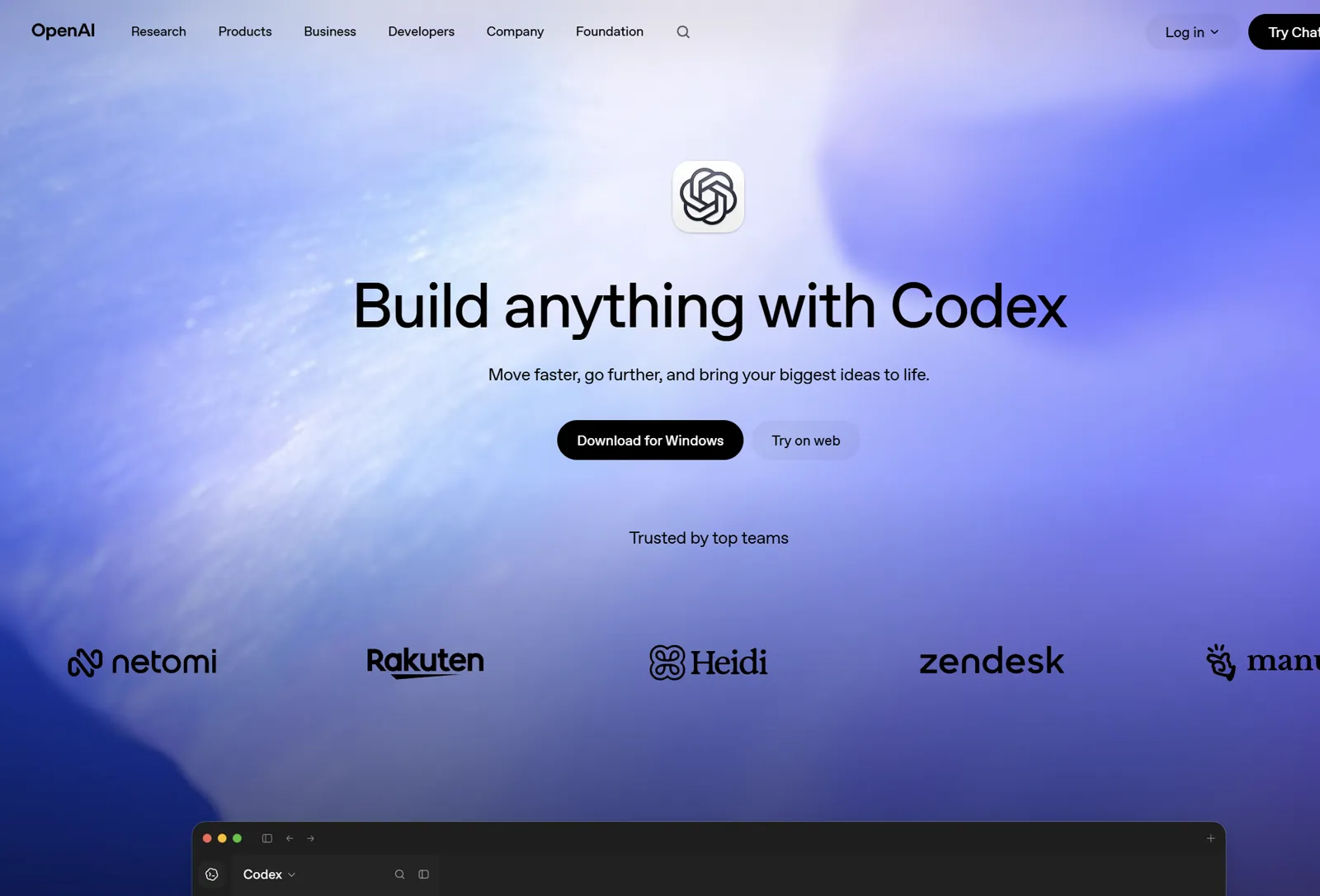
Observed in vendor demo, Codex: in OpenAI's "Getting started with Codex" video (OpenAI), at about 5:00 a slide on installing the CLI says "we're distributing a new version 1-2x per week" and points to the changelog. At about 10:26 a slide lists common AGENTS.md sections, including build and test commands and "Helpful CLI tools and MCP servers". Both are vendor recordings.
Design and layout rating
Visual design, layout, clarity, onboarding time and speed are n/s for both. Those criteria need timed product sessions, and the captures here are marketing pages and vendor demos.
Capabilities for building GTM tools
| Capability | Claude Code | Codex |
|---|---|---|
| Project instructions file | CLAUDE.md, and it can read AGENTS.md (Claude Code docs) | AGENTS.md (Codex pricing) |
| MCP for outside tools | Yes (Claude Code docs) | Yes (Codex pricing) |
| Extensions | Skills, hooks and plugins (Claude Code docs, Claude Code README) | Skills, hooks and plugins (Codex pricing, Codex hooks docs) |
| Parallel agents | Subagents and the Agent SDK (Claude Code docs) | Subagents, custom agents and the Codex SDK (Codex pricing) |
| Scheduled jobs | Cloud scheduled tasks (research preview; schedule, API or GitHub triggers), plus desktop scheduled tasks and /loop on your machine (Claude Code cloud scheduled tasks docs) | Desktop app tasks on local projects (computer on, app running); scheduled tasks in ChatGPT Work, which can run in Work Cloud where the workspace offers it; workspace Team Tasks in the cloud (Codex scheduled tasks docs, Get started with ChatGPT Work docs, Team Tasks docs) |
| CI with an API key | GitHub Action with an API key or subscription OAuth token (Claude Code GitHub Actions docs); GitLab CI/CD beta, maintained by GitLab, with an API key, Bedrock or Agent Platform (Claude Code GitLab CI/CD docs) | GitHub Action, openai/codex-action@v1, with an OpenAI API key, running codex exec (Codex GitHub Action docs) |
| Cloud agent | Cloud sessions on Pro, Max, Ultra, Team and eligible Enterprise seats; Anthropic-hosted sessions need GitHub to clone and open PRs; GitLab as a bundle that cannot push back (Claude Code cloud sessions docs); Team and Enterprise self-hosted environments (public beta, off by default) can use another git host with --environment dispatch (Claude Code self-hosted environments docs) | Codex Cloud with ChatGPT sign-in, not in API-key mode (Codex Cloud docs, Codex pricing); GitLab beta on all ChatGPT plans, running in Codex cloud (Codex GitLab docs) |
| Automatic PR review | Code Review, "automatic review on every pull request" (Claude Code GitHub Actions docs) | GitHub code review and automatic PR reviews (Codex pricing); GitLab merge request reviews (Codex GitLab docs) |
| Slack | Pro, Max and Ultra accounts in workspaces not connected to Claude Tag, with cloud sessions and GitHub repos; Team and Enterprise use Claude Tag (Claude Code in Slack docs) | @ChatGPT, set up by a ChatGPT workspace owner or admin; cloud delegation needs a published workspace-shared environment, and personal Cloud environments are not included (Codex Slack docs). Whether an individual Plus user without a workspace admin can use it: not confirmed |
| Linear | Through MCP connectors, an example in the scheduled tasks docs (Claude Code cloud scheduled tasks docs) | Linear cloud integration (Codex pricing) |
| Headless use | claude -p in scripts and CI (Claude Code docs) | codex exec and the SDK (Codex pricing) |
For a GTM tool, MCP and scheduling matter most. MCP lets the agent reach your CRM or docs through a server, and a scheduled task can run an enrichment or reporting job on a timer. Check which mode you need: a job that touches local files needs the machine on with either tool.
Technical comparison
Both install with a one-line script on macOS, Linux and Windows, and both offer Homebrew. Claude Code also lists WinGet and marks npm install as deprecated (source). Codex still lists npm (source).
The Codex repository is licensed under Apache-2.0 (source). The Claude Code README reviewed here points to Anthropic's Commercial Terms and does not state an open-source license (source).
Claude Code's terminal CLI, VS Code and JetBrains support third-party model providers (Claude Code docs). Codex with an API key follows "the API models available to your key" (Codex pricing).
On data, both vendors draw the same line. For commercial use, Anthropic says it "does not train generative models using code or prompts sent to Claude Code under commercial terms" (Team, Enterprise, API and third-party platforms) unless the customer opts in, with 30-day standard retention. For consumer plans (Free, Pro, Max, Ultra), Anthropic trains on data "when this setting is on (including when you use Claude Code from these accounts)", and keeps it for 5 years if you allow model improvement or 30 days if you don't (Claude Code data usage docs). OpenAI says it does not use Business, Enterprise, Edu or API Platform data for training by default. On personal Free, Plus and Pro workspaces "data sharing is enabled by default", the "Improve the model for everyone" setting applies, and Codex has a separate "Include environments" setting for environment context (OpenAI data controls). The Claude Code README's line about "clear policies against using feedback for model training" covers feedback, not your account's training setting (Claude Code README).
Pricing and usage limits
| Tier | Claude, for Claude Code | ChatGPT, for Codex |
|---|---|---|
| Free | $0, Claude Code not included (Claude pricing) | $0, GPT-6 Luna in the desktop app, subject to rollout (Codex pricing) |
| Low | None on the Individual tab (Claude pricing) | Go, $8, same GPT-6 Luna line on its plan card (Codex pricing) |
| Main | Pro, $20 billed monthly, or $17 a month billed annually ($200 up front) (Claude pricing) | Plus, $20: web, CLI, IDE extension and iOS (Codex pricing) |
| Heavy | Max $100, 5x Pro usage; Ultra $200, no 5-hour limit for verified accounts (Claude pricing) | Pro at $100, $200 or $500 (Codex pricing) |
| Pay as you go | Anthropic Console account (Claude Code docs) | API key at API pricing (Codex pricing) |
Neither pricing page publishes a fixed message count, and on both, coding shares a pool with the rest of the plan. Claude Code "shares the same usage limits as the rest of your plan"; Max gets 5x Pro, Ultra 10x the weekly limit with "No 5-hour limit for verified accounts", and Anthropic "may limit your usage in other ways, such as weekly and monthly caps". At a limit you can wait, upgrade, or on paid plans "turn on usage credits to keep working at standard API rates", or switch to pay-as-you-go API credits through a Console account. Max includes $100 a month in API credits and Ultra $200 (Claude pricing). Codex and ChatGPT Work share usage. OpenAI estimates 15 to 160 local GPT-6.1 Sol messages per five hours on Plus, says the estimates "are not fixed message limits", that "Weekly limits may also apply" and that "Cloud tasks may use more of your allowance than local messages"; Pro plans currently have no five-hour limit. At a limit, the current turn can finish, Plus and Pro users can buy credits, and "All users may also run extra local chats using an API key", charged at standard API rates (Codex pricing).
So for budgeting I would treat both main plans as $20 a month billed monthly, with a ceiling you learn from the usage dashboard and an overflow route at metered rates on both. The two $20 plans do not promise the same amount of work.
Company and operations
| Fact | Anthropic, Claude Code | OpenAI, Codex |
|---|---|---|
| Latest company-announced round | $65B Series H at $965B post-money, 28 May 2026 (source) | $122B committed at $852B post-money, 31 March 2026 (source) |
| Company revenue, as stated | Run-rate revenue "crossed $47 billion" in May 2026 (source) | "$2B in revenue per month" in March 2026 (source) |
| Product revenue | Claude Code run-rate "over $2.5 billion", February 2026 (source) | Not reported by OpenAI in the pages reviewed |
| Product users | Weekly active users "doubled since January 1" 2026, no absolute count (source) | "more than 5 million weekly active users", 2 June 2026 (source) |
On shipping, both companies describe a fast pace in their own words. Anthropic wrote in February 2026: "In January alone, we launched more than thirty products and features" (source). OpenAI Developers posted on X in February 2026 that the Codex app added built-in worktrees, plan mode, skills and automations, "Available on macOS, with Windows coming soon" (post); on 7 November 2026 both the Codex and the Claude Code product pages offered "Download for Windows" to the Windows research browser, and the buttons may differ by device (Claude Code product page, source). Both are company statements that this review could not measure.
Reuters reported on 6 November 2026, citing one source, that OpenAI closed $11 billion of a round valuing it at $1.25 trillion (source). OpenAI had not confirmed this in the pages reviewed. Third-party revenue trackers for both products exist; I left them out because they are modelled estimates. Headcount is not covered.
What each does well and badly
Claude Code does well on one engine and one config across five surfaces (Claude Code docs) and on cloud sessions and cloud scheduled tasks that keep running with your laptop closed (Claude Code cloud sessions docs, Claude Code cloud scheduled tasks docs). Its weak spots: on subscriptions the free plan excludes it (Claude pricing); its Anthropic-hosted cloud sessions, cloud scheduled tasks and Slack flow need GitHub for cloning and PRs. The other-git-host exception applies to Team and Enterprise self-hosted sessions started with an --environment dispatch (Claude Code cloud sessions docs, Claude Code in Slack docs, Claude Code self-hosted environments docs). The /schedule CLI command needs a claude.ai subscription login rather than a Console API key (Claude Code cloud scheduled tasks docs); and its README states no open-source license (Claude Code README).
Codex does well on free and $8 plans that list GPT-6 Luna in the desktop app, "subject to rollout" (Codex pricing), an Apache-2.0 CLI you can read (Codex README), one agent across ChatGPT, editor and terminal "connected by your ChatGPT account" (Codex product page), Codex Cloud tasks that "can keep working while your computer is asleep" (Codex Cloud docs), and a GitLab beta that runs in Codex cloud (Codex GitLab docs). Its weak spots: API-key mode drops the cloud features, so CI runs through the GitHub Action instead; Computer Use and Memories are marked region-limited (Codex pricing); and the Slack flow documented in the Slack docs needs a ChatGPT workspace admin and a workspace-shared environment (Codex Slack docs), although the Plus plan card lists "Cloud-based integrations like automatic code review and Slack integration" (Codex pricing). This review did not check Claude's regional limits.
Shared: neither publishes a fixed message count, both draw coding from the same pool as the rest of the plan, both offer metered overflow, and both give individual-plan users a training setting (OpenAI says sharing is on by default; Claude's plan table lists training as "Opt-out"), while commercial and API use is excluded from training by default (Claude pricing, Codex pricing, Claude Code data usage docs, OpenAI data controls).
Who should pick which
- Pick Claude Code if you already pay for Claude Pro or Max and your code is on GitHub, or you want cloud scheduled tasks on a Claude subscription.
- Pick Codex if you already pay for ChatGPT Plus or higher, want to read the CLI source, want Codex Cloud tasks on a ChatGPT plan, or want a cloud review and task integration for GitLab merge requests.
- If your team is on GitLab, compare the documented routes: Claude's CI/CD beta runs in your own runners, Codex's GitLab integration runs in Codex cloud. Claude can also take a GitLab bundle into a cloud session (no push back), and its Team and Enterprise self-hosted beta can use another git host. No end-to-end GitLab pipeline or route was benchmarked in this review.
- If code quality decides it, give both the same small repo for a week. That test will tell you more than this page can.
FAQ
Is Claude Code included in the free Claude plan?
No. Claude's plan table lists Claude Code from Pro upward (Claude pricing).
What happens when I hit Codex usage limits?
OpenAI says the agent can finish the turn it is on, Plus and Pro users can buy credits, and any user can run extra local chats with an API key at standard API rates (Codex pricing).
What happens when I hit Claude usage limits?
You can wait for the reset, move to a higher plan, or on paid plans turn on usage credits "at standard API rates"; heavy coding can also move to pay-as-you-go API credits through a Console account (Claude pricing).
Can both read an AGENTS.md file?
Yes. Codex uses AGENTS.md (Codex pricing), and Claude Code says it can read an existing AGENTS.md in place of CLAUDE.md (Claude Code docs).
Is Codex open source?
The Codex CLI repository is Apache-2.0. The cloud agent and the models are OpenAI services (source).
Disclosure, gaps and changelog
No account testing was performed for this review. Source links go directly to the vendors' official pages and the cited publications. FAQ questions come from topics both vendors answer in their own docs.
Known gaps: no hands-on test of either agent; plan eligibility for Codex web scheduled tasks, Work Cloud and Team Tasks not checked; whether an individual ChatGPT Plus user without a workspace admin can use @ChatGPT in Slack not confirmed; changelogs and status pages not reviewed; no Codex product revenue disclosure found; headcount not covered; demos sampled at the timestamps above, not watched in full.
Changelog: 7 November 2026, first version.