01 / Flagship productIn progress
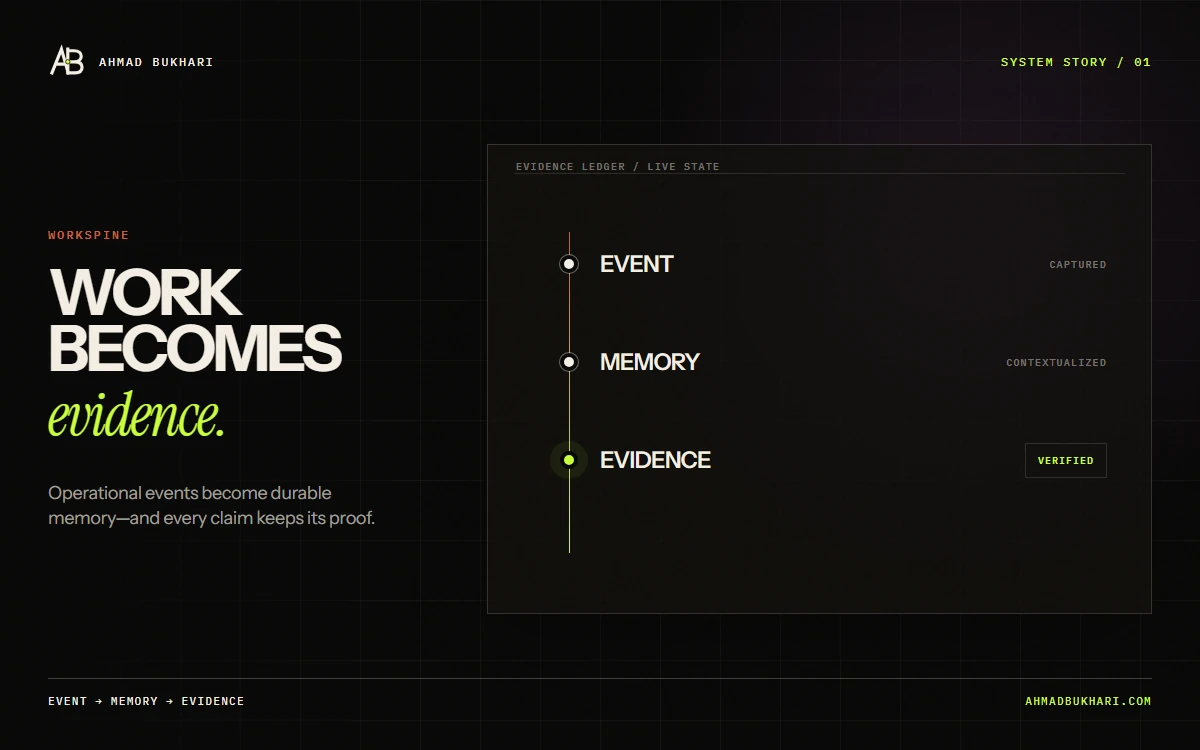
Workspine
A private desktop work-memory system that turns fragmented activity into a navigable timeline of context, decisions, and evidence.
Product architecture · Memory · PrivacyInspect ↗
 Ahmad BukhariAgentic AI & LLM Systems Specialist
Six system stories spanning private products, governed delivery, workflow reliability, migration, CRM operations, and resilient onboarding.
Six system stories spanning products, delivery infrastructure, migration, reliability, and cross-platform operations.
Every card declares maturity and confidentiality. No invented ROI. No client data.
A private desktop work-memory system that turns fragmented activity into a navigable timeline of context, decisions, and evidence.
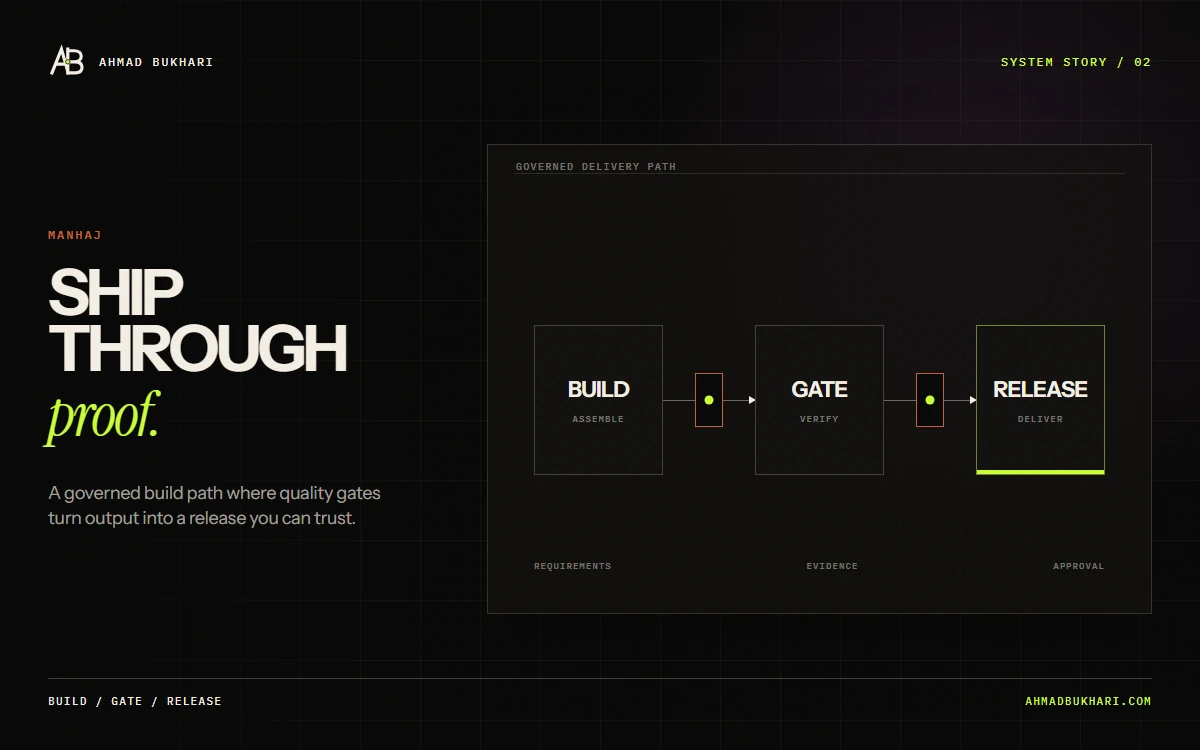
A system factory and control plane for turning repeatable delivery knowledge into governed modules, agents, and releases.
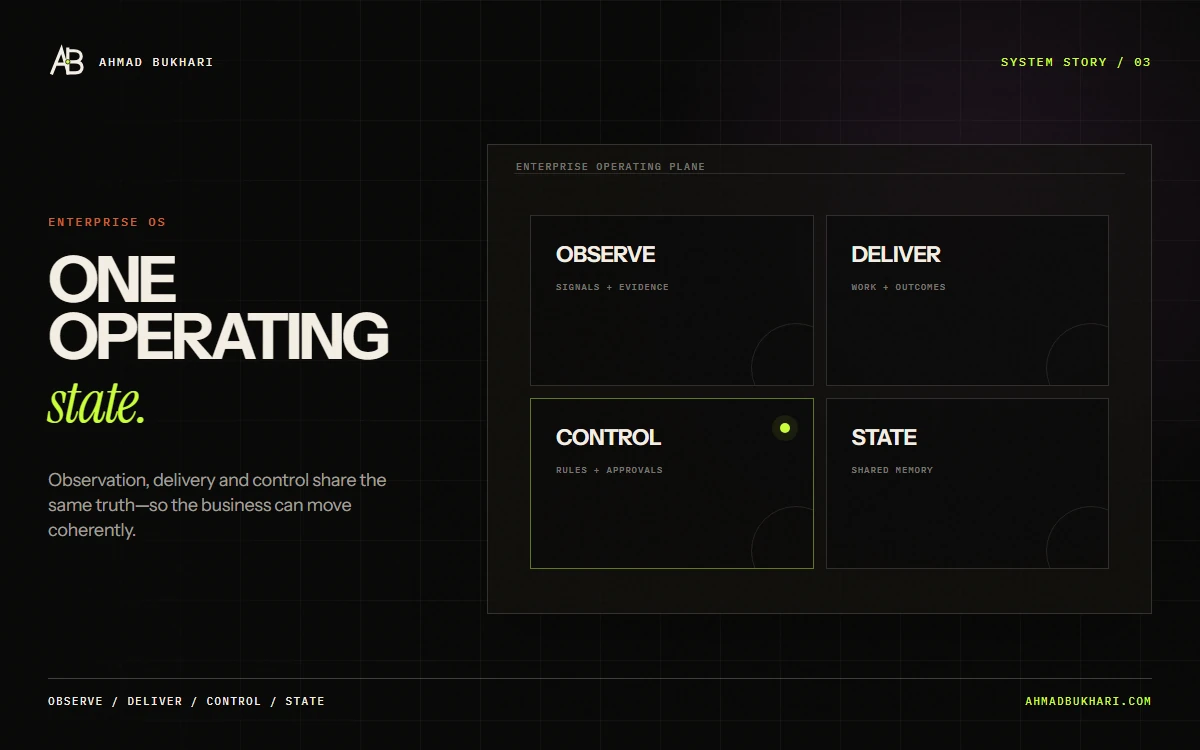
A layered operating model joining permissions, delivery, finance, state gates, and observability without exposing client internals.
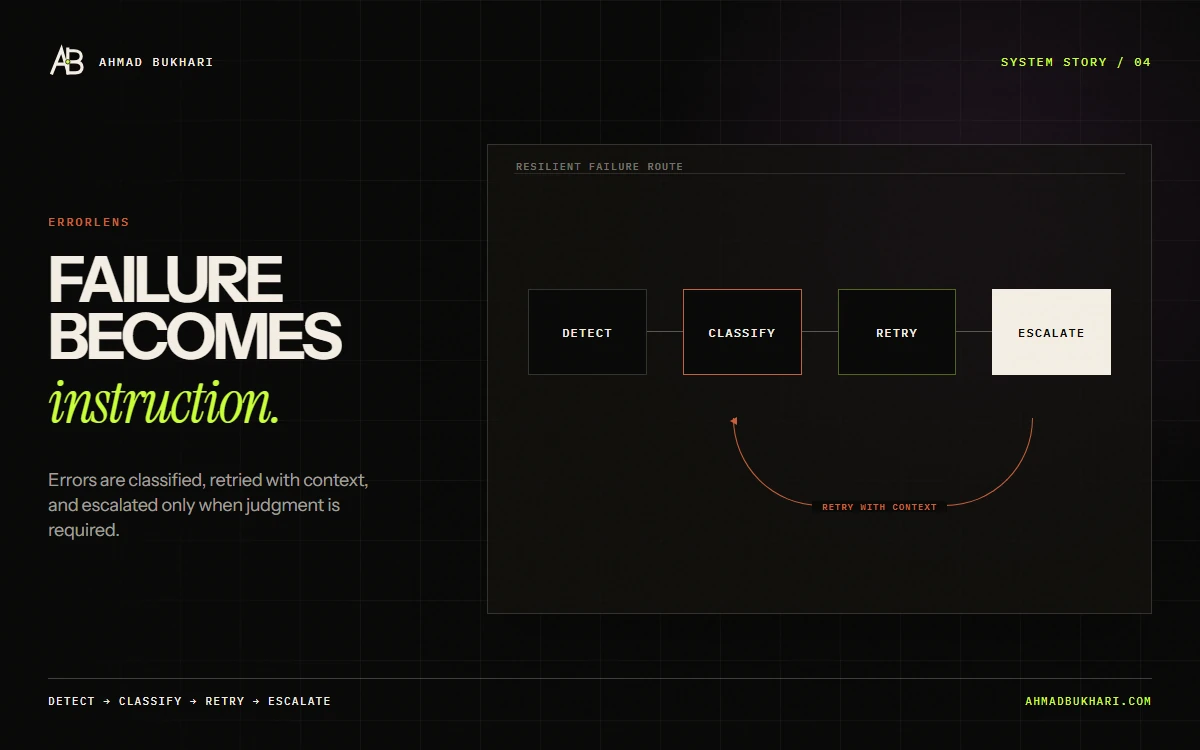
ErrorLens turns workflow failures into structured events. It classifies errors, retries safe cases, escalates with context, and records what needs fixing.
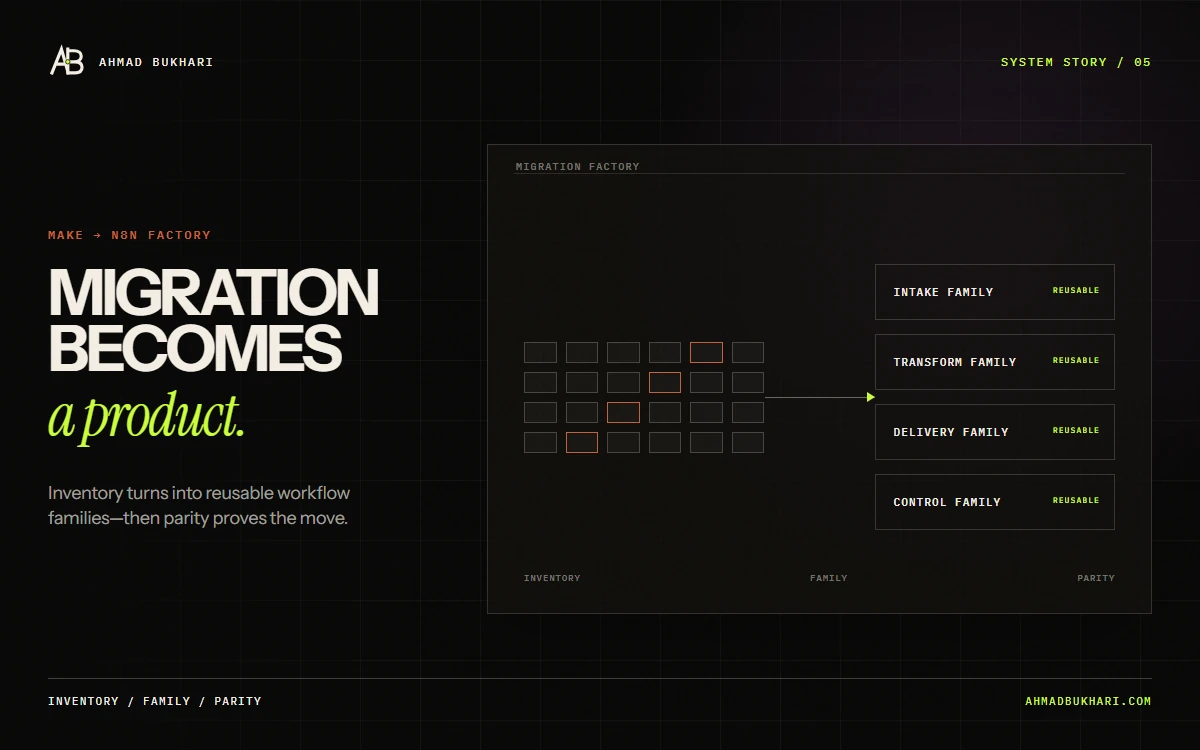
A migration program that classifies 108 workflow candidates into reusable families, then validates behavior instead of copying spaghetti.
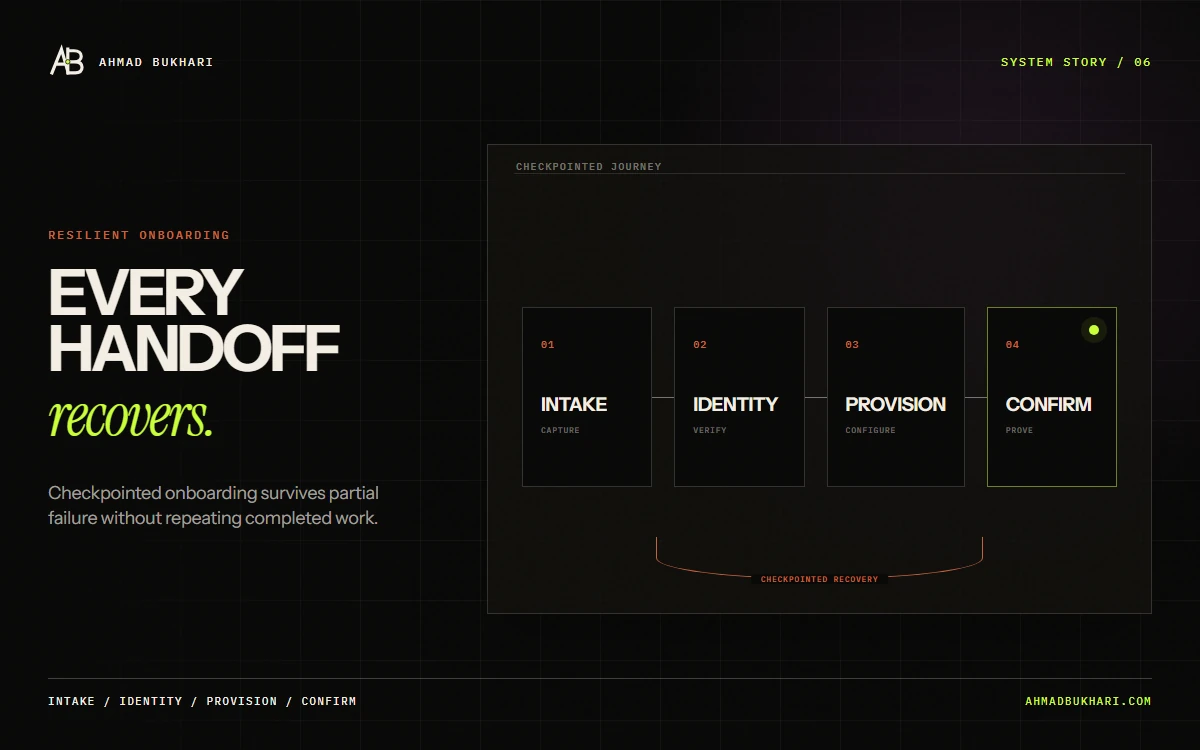
A checkpointed onboarding architecture spanning CRM, billing, calendars, messaging, and human handoffs. Recovery is part of the design.
Small, focused systems that expose the architecture, the safety rails, and the real run path.
Explore every repository ↗Deterministic n8n failure detection with local LLM root cause analysis and Slack ready digests.
KB grounded ticket classification, priority, routing, and drafts with approval before customer delivery.
A schema aware, SELECT only analyst that reads errors, repairs its SQL, and makes every attempt visible.
New arXiv papers become a referenced briefing, comparison table, open questions, and interactive topic map.
A local voice receptionist that extracts intent, schedules an appointment, and returns a spoken confirmation.
Messy documents become validated records through schema checks, model repair, and explicit failure logs.

Bring the workflow, the failure points, and the desired outcome. We will map the first useful move together.
A public demo proves only the behavior visible in that deployment. A public repository adds inspectable implementation and tests. An anonymized architecture record explains a pattern without proving a client result. A documented scope states what was planned or inventoried, while a private implementation remains uninspectable from this site. Each case keeps those evidence states separate.
Each record labels whether evidence is a public deployment, public repository, private implementation, anonymized architecture, documented project scope, or self-reported history. Those labels are not interchangeable.
Only when a result has an attributable source, measurement definition, method, and time window. Architecture records without that evidence describe the system pattern and its limits instead of presenting unverified ROI.
Evaluate its state model, permissions, failure recovery, human handoff, observability, acceptance tests, ownership, and evidence—not only its happy-path demo.