Store analytics and order context - archived source
46 nodes · 46 non-note nodes
Open read-only HTML explorer →Download explicitly sanitized review JSON
Commerce and campaigns
Commerce intelligence and creative connects Meta advertising and Shopify store context with research, reporting and creative requests. The Airtable-led workspace carries commercial information into the brief, giving strategists a connected starting point for reviewing the next campaign direction.
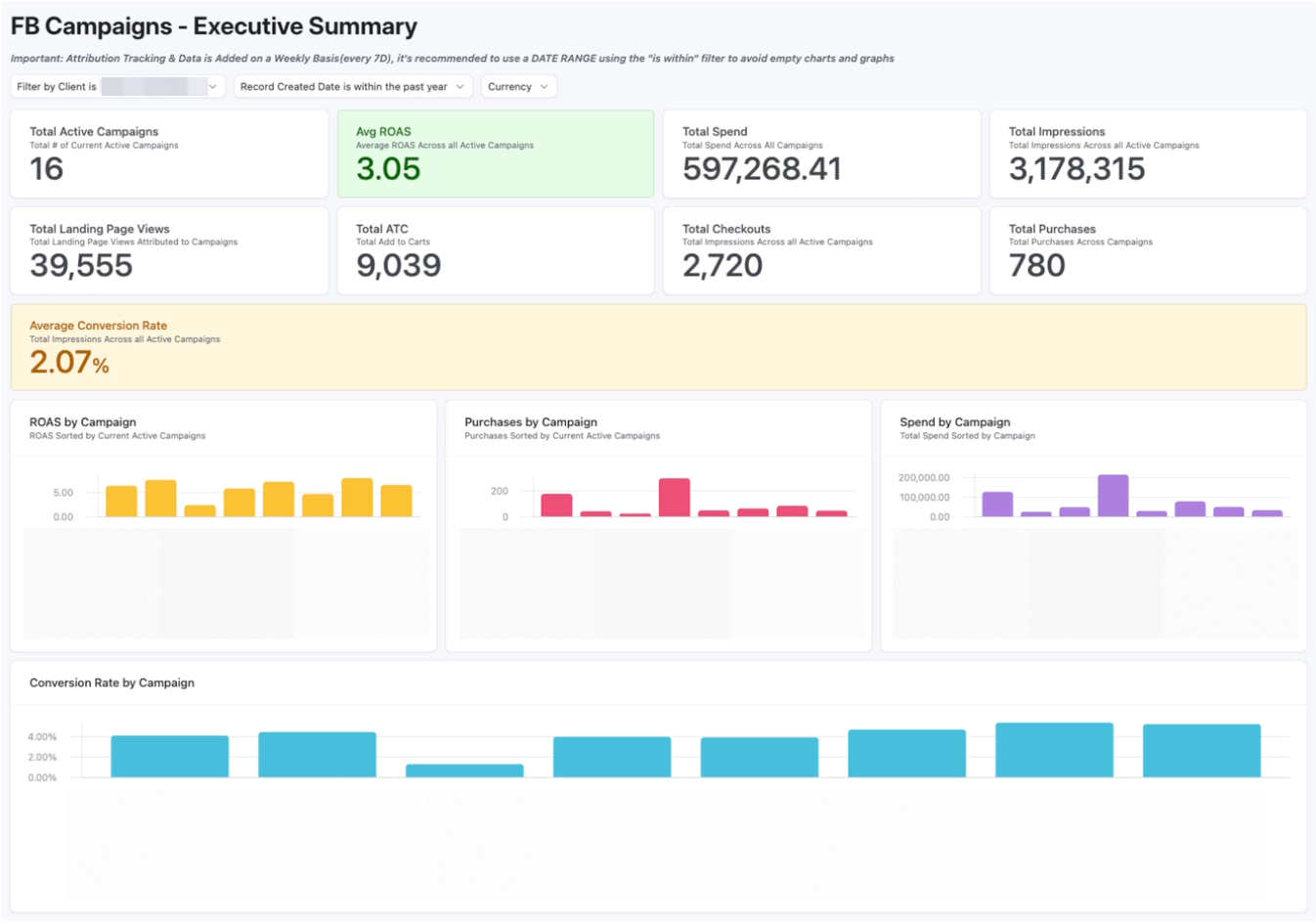
Recorded historical workspace; identifying fields locally anonymized. Values are source content, not automation-caused uplift.
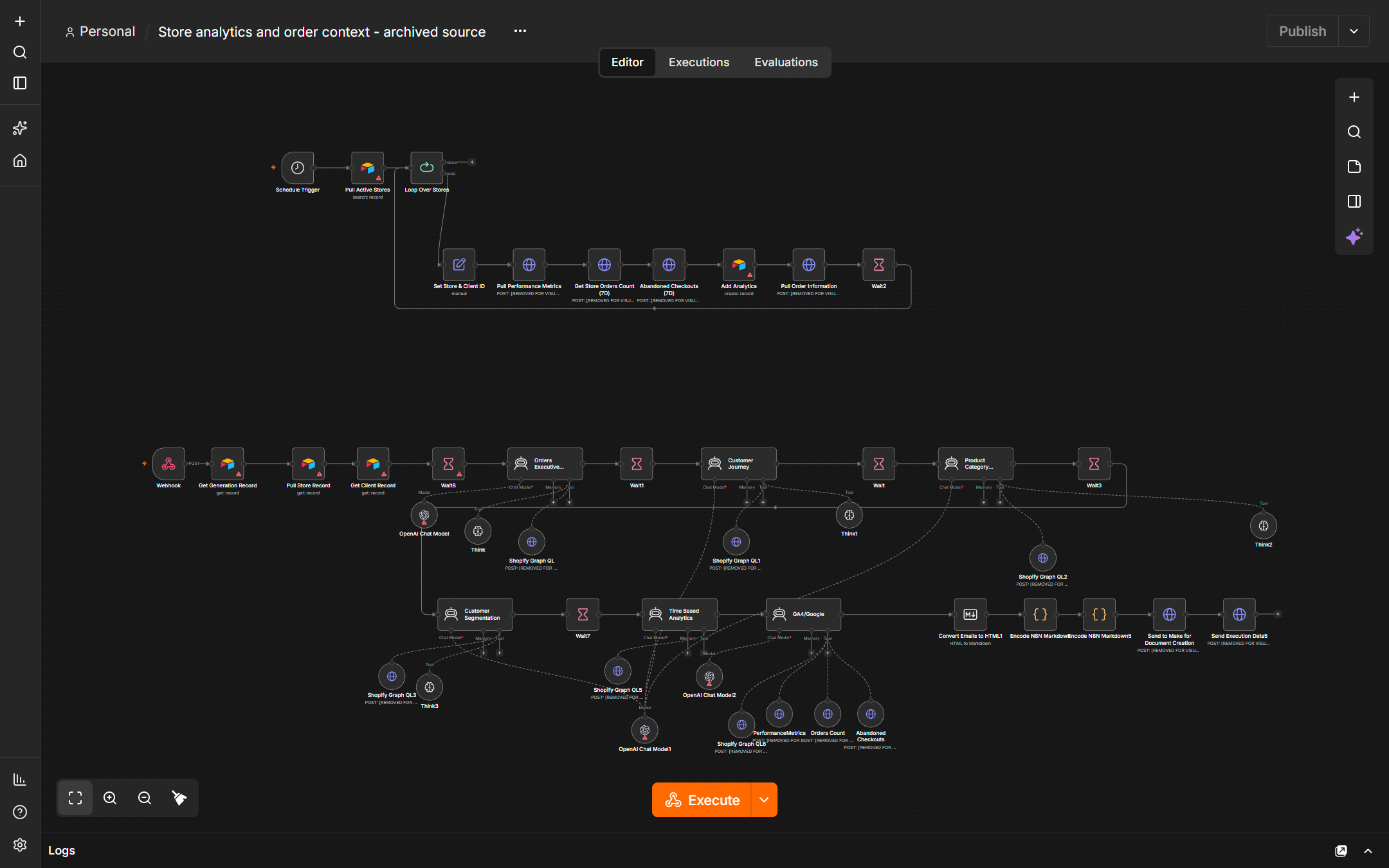
46-node source imported locally, inactive and without credentials. No execution or production acceptance implied.
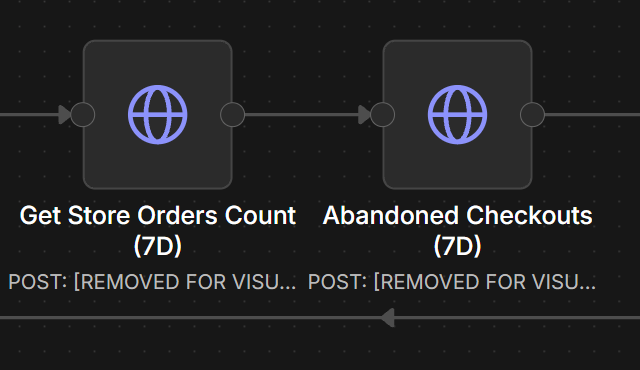
Native local source detail.
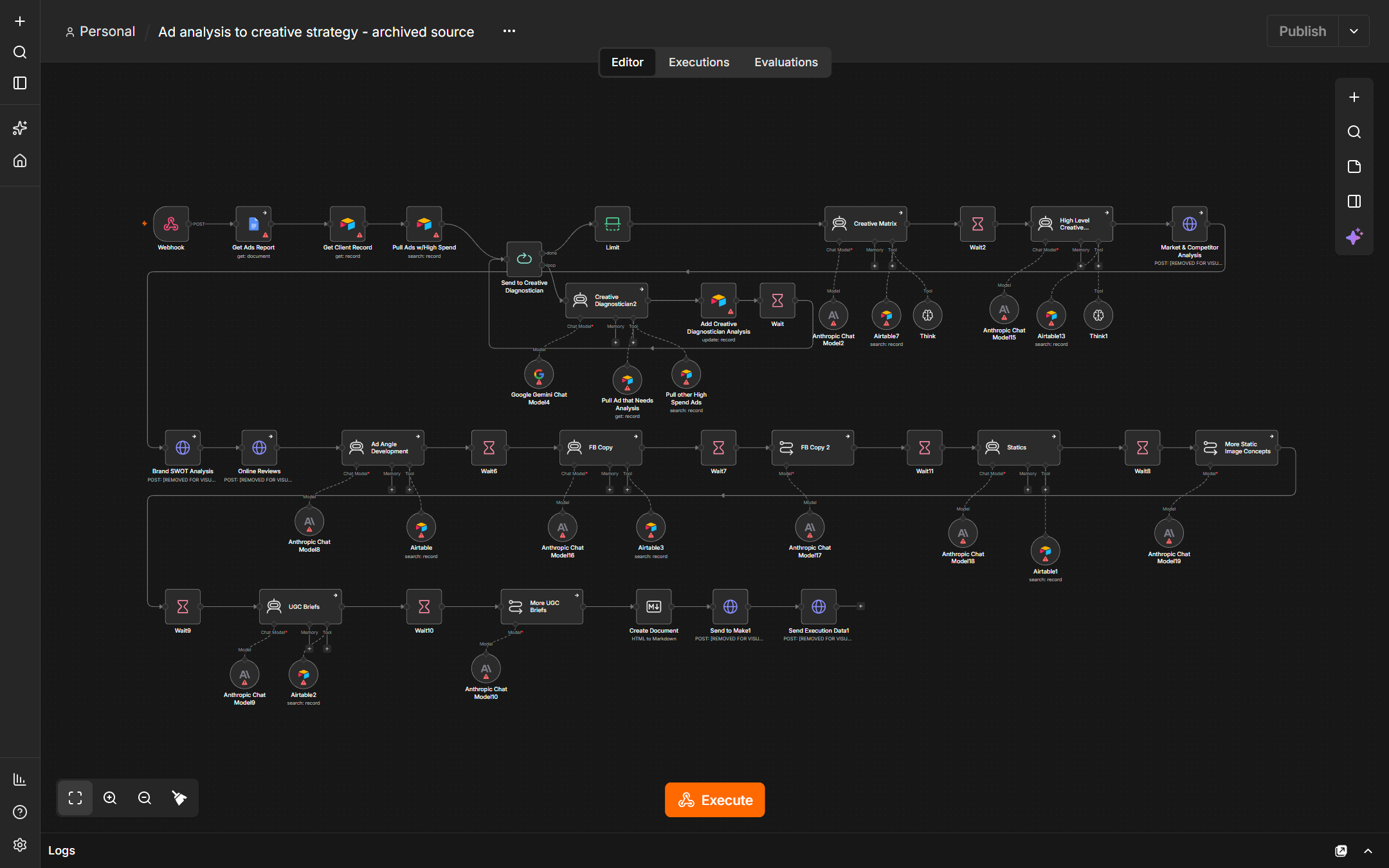
51-node source imported locally; no execution.
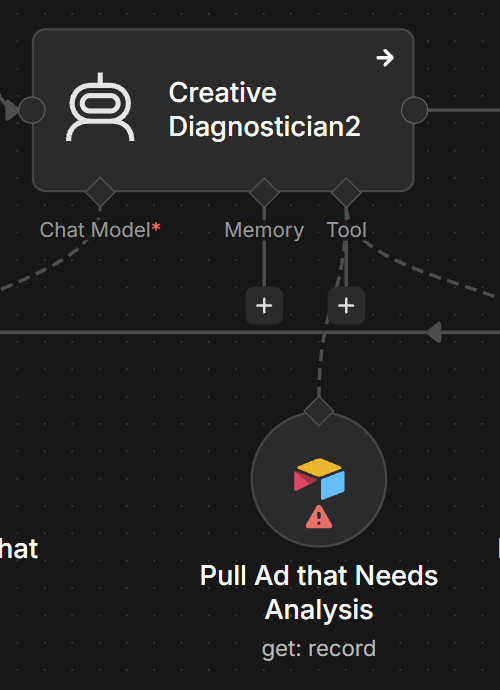
Native local source detail.
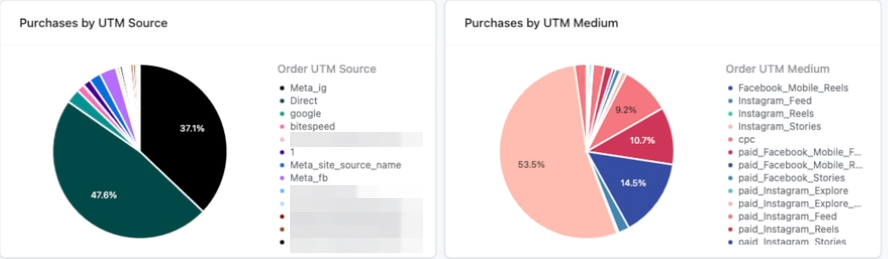
Recorded source values and qualifiers retained; identifying fields locally anonymized.
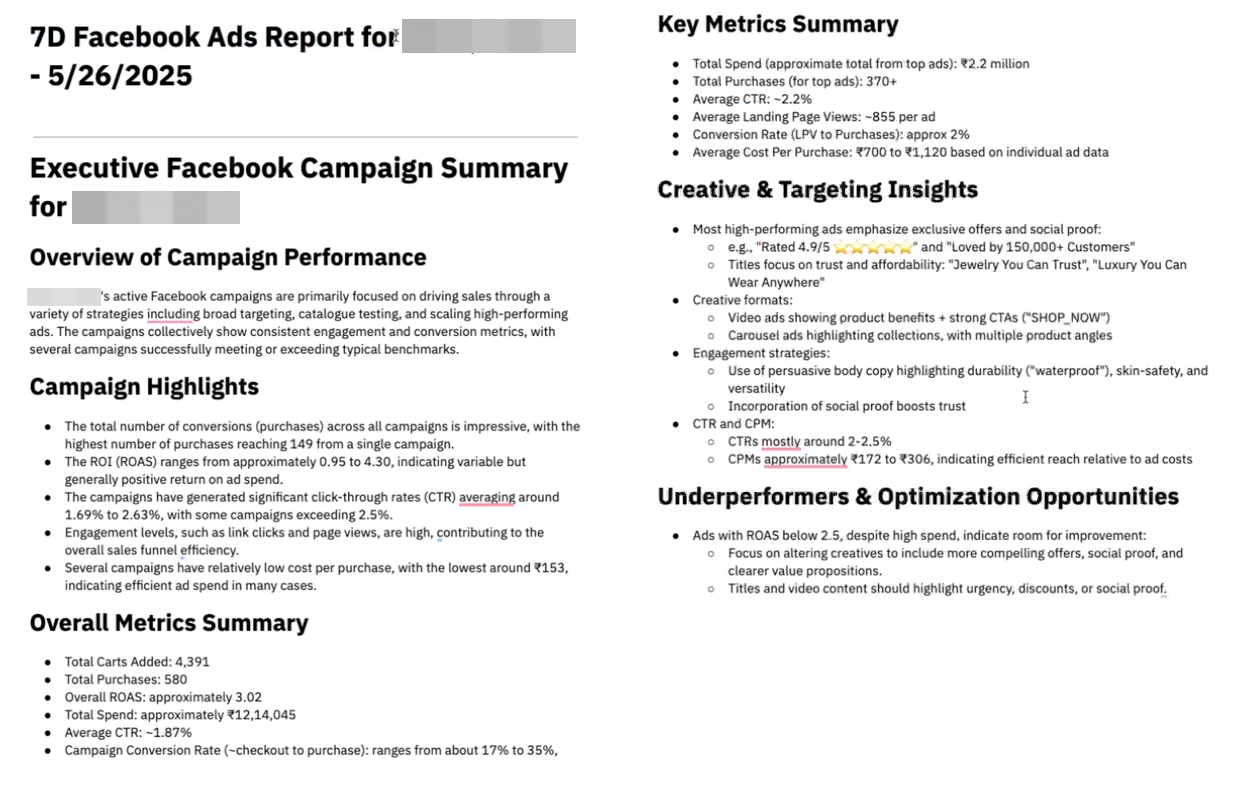
Recorded workspace excerpt, not current performance. Identifying fields locally anonymized.
Helps creative teams develop briefs from shared commercial context and keep strategy review connected to its inputs.
46 nodes · 46 non-note nodes
Open read-only HTML explorer →Download explicitly sanitized review JSON
51 nodes · 51 non-note nodes
Open read-only HTML explorer →Download explicitly sanitized review JSON
 n8n
 Airtable
 Google Docs
 Anthropic
 Google Gemini
 Shopify
Historical SOP, workflow archives and recorded interface views.
Native n8n imports are local and inactive, not production execution. Historical recording capture dates are unknown; a displayed report period is not its capture date. Local source review: October 27, 2026. Public release and client-material clearance remain separate.
The system joins Meta advertising and Shopify/store context in an Airtable-led workspace. The original source archive includes store analytics and creative-strategy workflows, which are shown as inactive local n8n imports.
The recorded interface describes seven-day collection and attribution cadences. Date filters, metric definitions and the distinction between measured fields and source estimates stay attached to the displayed figures; values from different filters are not merged.
The historical dashboards and generated report excerpts demonstrate the information available to a creative team. They do not establish that this automation caused the orders, ROAS or revenue shown.
The useful output is a research-informed creative request with the relevant report and store context. The team still reviews the strategy and copy before client-facing delivery. No labor-hour reduction is asserted without a timing record.
n8nAirtableGoogle DocsAnthropicGoogle GeminiShopifyRecovered source node declarations plus documented store/ad inputs.
| View | Provenance and limitation | Evidence class |
|---|---|---|
| Fig. 1 | Historical campaign and store context Recorded historical workspace; identifying fields locally anonymized. Values are source content, not automation-caused uplift. | Historical recording |
| Fig. 2 | Original store analytics workflow 46-node source imported locally, inactive and without credentials. No execution or production acceptance implied. | Local import only |
| Fig. 3 | Store analytics source branch Native local source detail. | Local import only |
| Fig. 4 | Original creative strategy workflow 51-node source imported locally; no execution. | Local import only |
| Fig. 5 | Creative strategy source branch Native local source detail. | Local import only |
| Fig. 6 | Historical attribution view Recorded source values and qualifiers retained; identifying fields locally anonymized. | Historical recording |
| Fig. 7 | Historical research and creative request Recorded workspace excerpt, not current performance. Identifying fields locally anonymized. | Historical recording |
Historical SOP, workflow archives and recorded interface views.
Native n8n imports are local and inactive, not production execution. Historical recording capture dates are unknown; a displayed report period is not its capture date. Local source review: October 27, 2026. Public release and client-material clearance remain separate.
Reviewed: 2026-10-27
Bring one workflow and the output the next person needs. Define its inputs, review decision and completion check before agreeing implementation scope.