The workflow connects the reporting record to creative analysis and a review-to-copywriting request, so an operator can turn performance context into the next production decision.
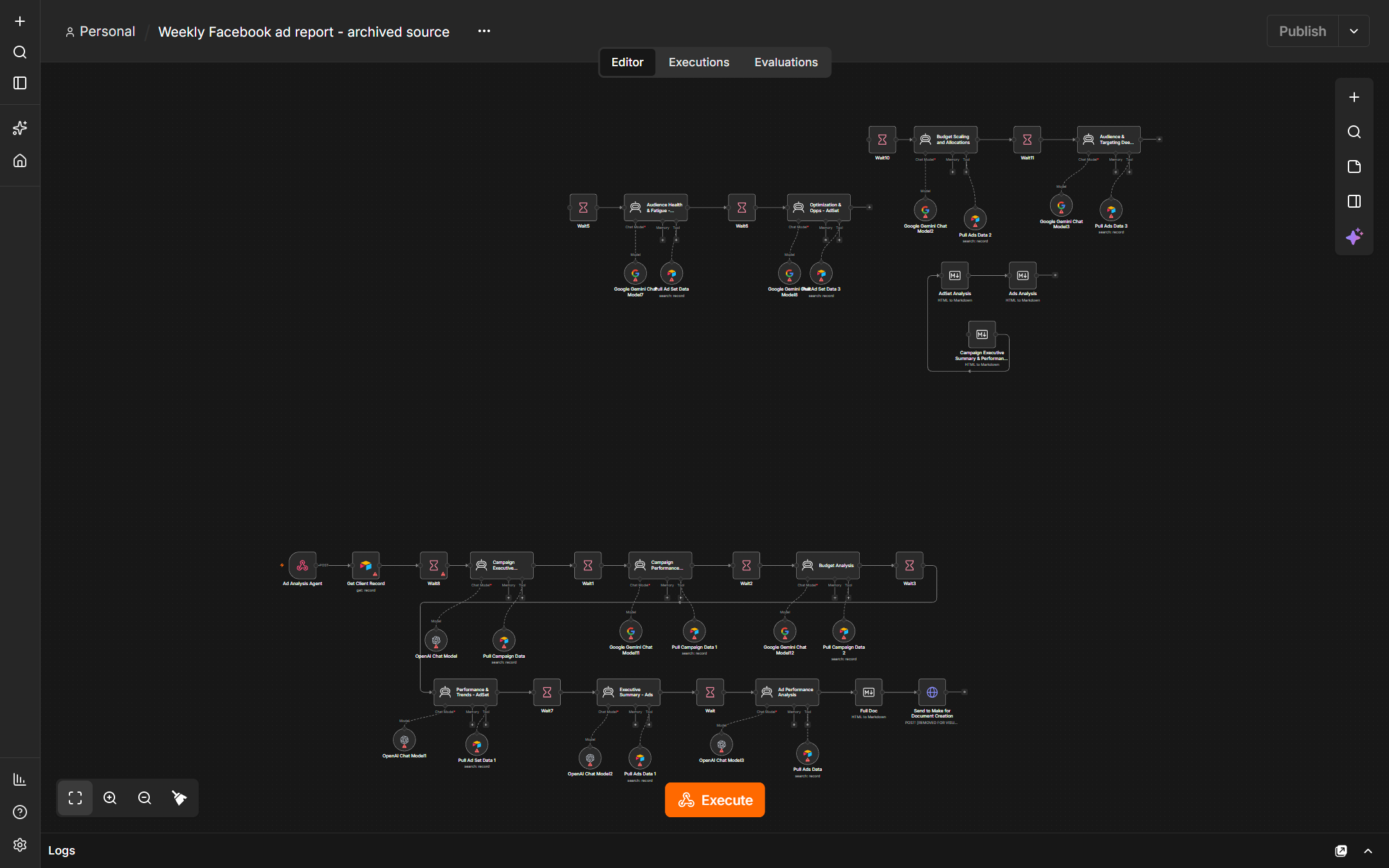
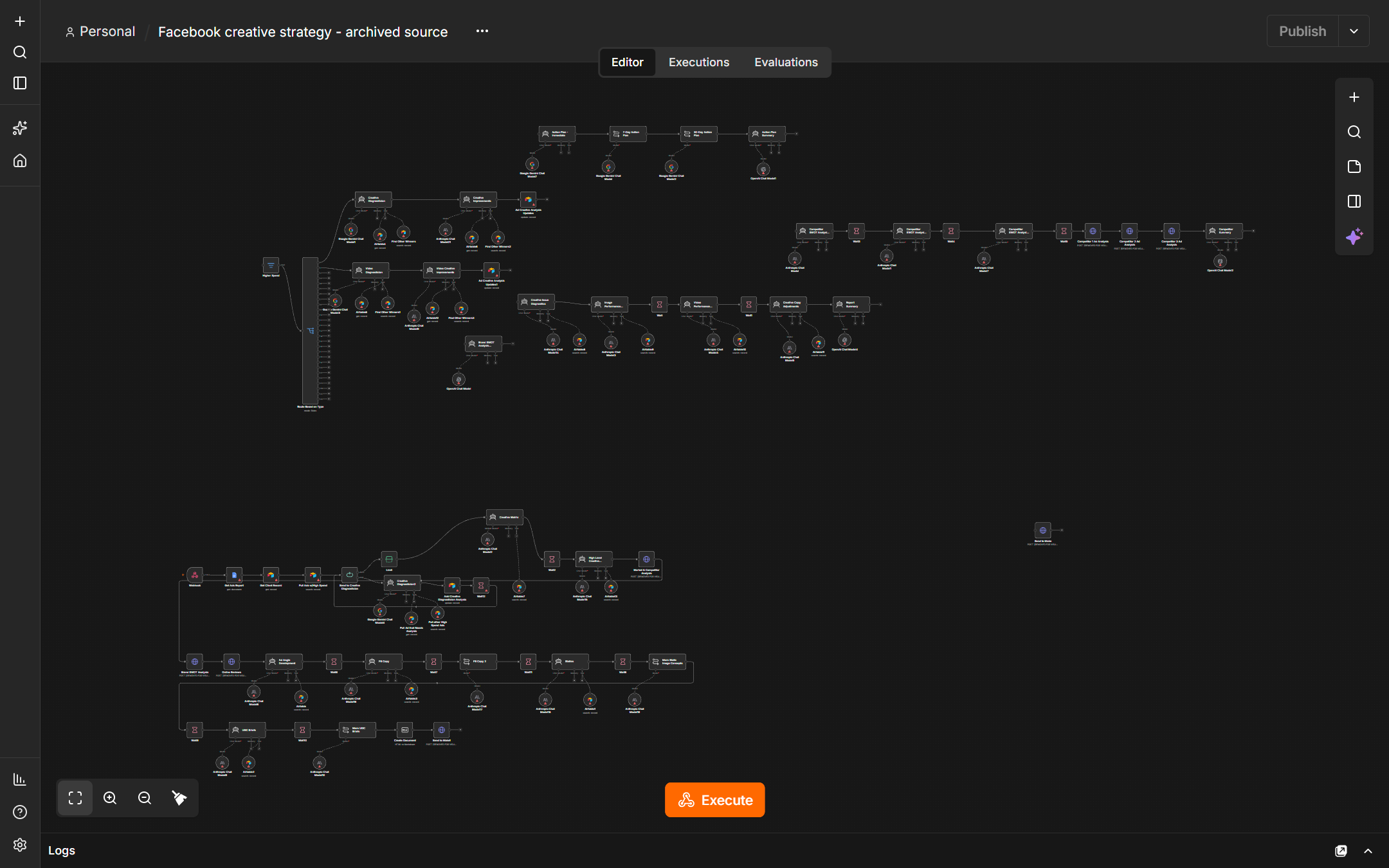
Report → review → copy; with separate reporting and creative-strategy source workflows. Original workflow structure and historical forms, not a measured ROAS improvement.
Collect a report with its period intact
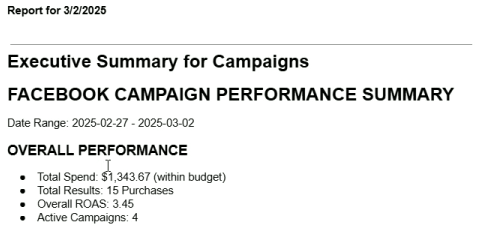
The weekly Facebook report source and the creative-strategy source are shown in native local n8n views. A retained historical report covers February 27 to March 2, 2025; its values are recorded document content, not current performance.
Give the reviewer the analysis context
The report belongs with the available observations and the next question for the creative team. A summary document alone is not an implementation outcome, so the backend structure and review handoff are visible alongside it.
Create a reviewable production request
The historical interface includes the ready-to-copywriter decision and copywriting instructions. This makes the next handoff inspectable instead of implying that an AI report automatically became published ads.
Quantify only the available basis
The seven-day reporting window and separate source workflows are concrete scope. No advertising lift or hours saved are added without a baseline and a comparable observed period.
Supporting views
About this view
Authentic raw-source crop: period February 27–March 2, 2025; $1,343.67, 15 purchases, 3.45 ROAS and 4 campaigns. Recorded source figures, not uplift caused by this automation.
About this view
47-node archived source imported locally. Inactive; never executed here.
About this view
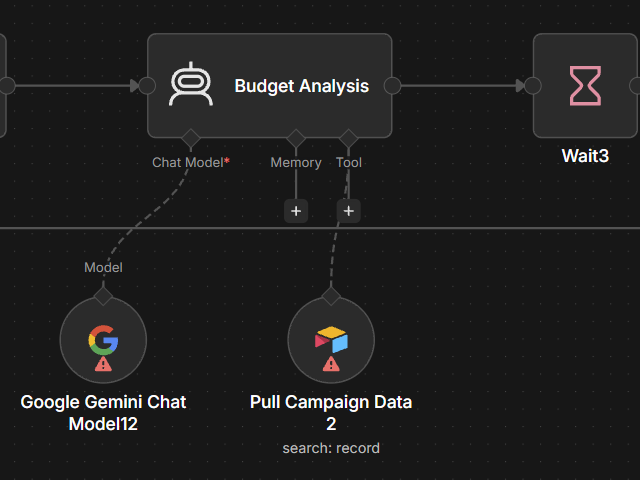
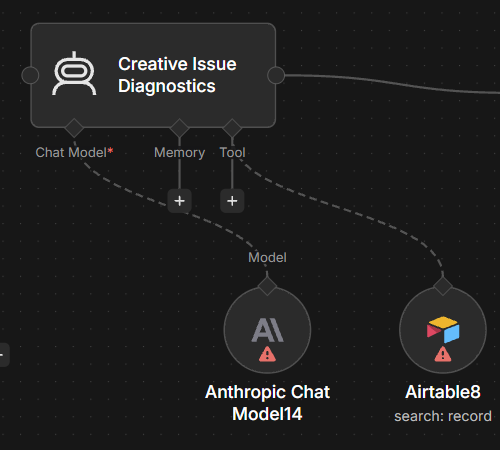
Native local source detail.
About this view
109-node archived source imported locally without credentials.
About this view
Native local source detail. No advertising result is inferred.